
Loading
Loading
Digital transformation is not the same as buying new software. It is the restructuring of how an organisation creates and delivers value — using digital capability as the enabling layer. That might mean automating a manual process, replacing a paper-based workflow with a digital system, using data to make decisions that were previously made on intuition, or building entirely new revenue streams that only digital infrastructure makes possible. The software is a tool, not the transformation itself. Executives who treat them as synonymous will invest in technology and wonder why operations have not changed. The transformation requires both the technical infrastructure and the organisational change to use it effectively.
The failure rate for digital transformation programmes is consistently reported at 70-85% across global studies — and my experience in South Africa is consistent with that figure. The failures are rarely technical. They are organisational. Leadership that delegates the programme to IT without taking strategic ownership. Programmes that prioritise technology selection over process redesign. Change management that is funded at 5% of the programme budget when it should be 30%. Governance structures that lack a single accountable executive. Vendor relationships that prioritise licence sales over genuine transformation outcomes. And perhaps most commonly: programmes that are defined as complete when the software goes live, rather than when the operational change is embedded. Technology goes live in weeks. Genuine transformation takes two to five years.
Digital transformation cannot be delegated. I have seen it delegated to CIOs, to consultants, to project managers, to transformation offices — and in every case where it succeeded, a senior executive maintained visible, active sponsorship throughout. That sponsorship has specific requirements. The executive must make the programme's strategic rationale clear to the organisation — not just announce it, but personally communicate why it matters. They must remove organisational obstacles that the transformation team cannot remove themselves. They must hold the organisation accountable for adoption, not just implementation. And they must be willing to change their own ways of working, not just expect their teams to change theirs.
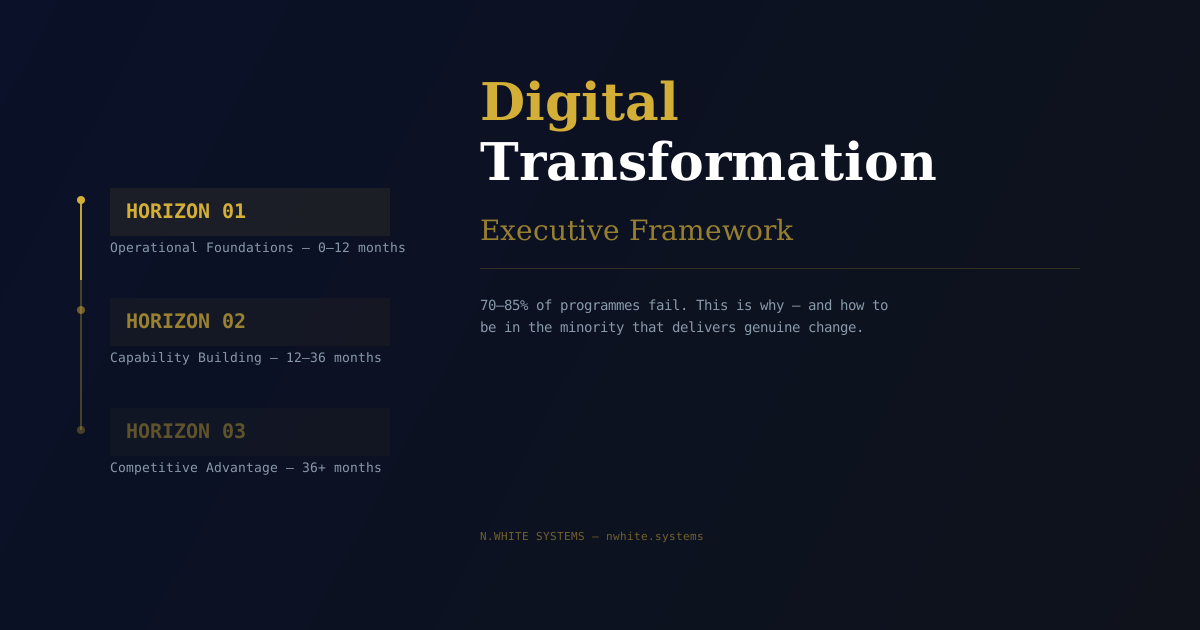
I recommend a three-horizon approach to digital transformation. Horizon one — the first twelve months — focuses on the operational foundations: auditing current digital infrastructure, eliminating redundant systems, automating the most manual and costly processes, and establishing data infrastructure that will support future decision-making. Horizon two — twelve to thirty-six months — focuses on capability building: new digital products and services, data-driven operating models, and the organisational structures needed to sustain digital operations. Horizon three — beyond thirty-six months — is where genuine competitive advantage emerges: AI-driven operations, new digital revenue streams, and the compounding returns of an organisation that has genuinely restructured around digital capability. Most organisations skip to horizon three without completing horizon one. The foundations always matter more than the ambition.
Executives do not need to understand technology at an engineering level. But they do need to understand the strategic implications of technology decisions. Platform lock-in — committing to a vendor ecosystem that is expensive to exit. Build versus buy — when proprietary capability creates competitive advantage versus when commodity software is sufficient. Data ownership — ensuring your organisation retains control of its data regardless of which platforms it uses. Security posture — what your exposure is and what your obligations are. These decisions require the executive's involvement because they have strategic consequences that extend well beyond the technology itself. I work with executives to translate these decisions into plain language and provide independent counsel that is not coloured by vendor relationships or commission incentives.
One of the most consistent mistakes I observe in digital transformation programmes is the absence of independent strategic counsel. Technology vendors have an incentive to sell their platforms. System integrators have an incentive to expand scope and billing hours. Internal IT teams have an incentive to work with technologies they already know. An independent adviser — someone with no vendor relationships, no licensing commissions, and no interest in scope expansion — provides a fundamentally different perspective. If you are navigating a significant technology decision or an underperforming transformation programme, the return on independent counsel is typically substantial.
Independent systems architect and digital strategist. I build digital infrastructure for organisations that cannot afford to get it wrong.