Loading
Loading
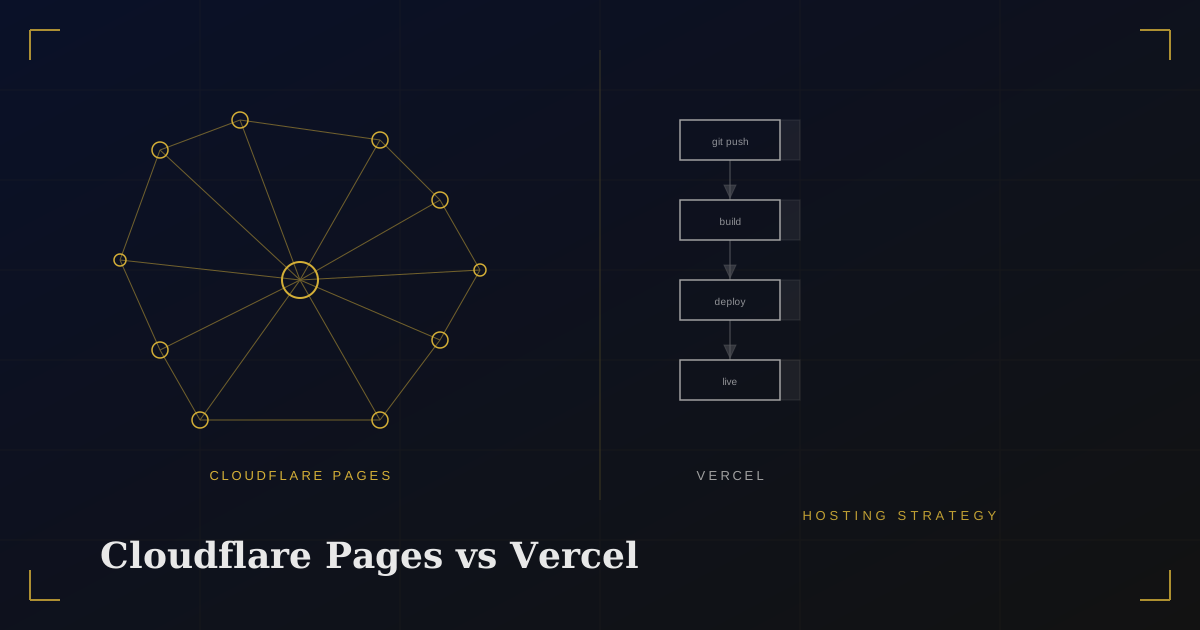

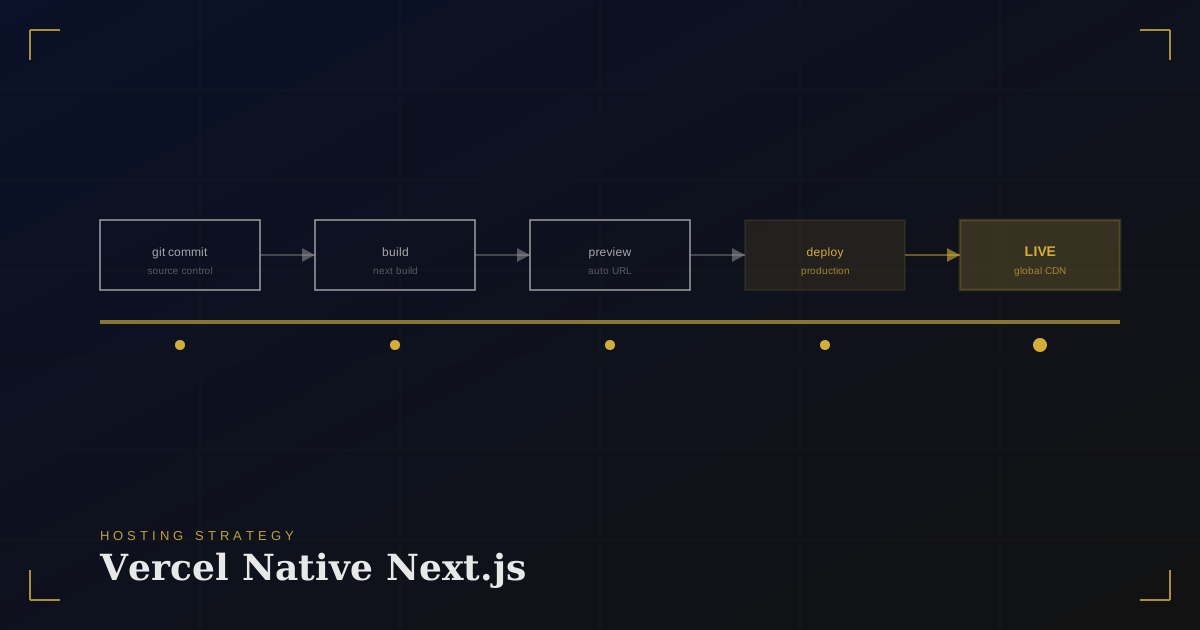
Vercel and Next.js are built by the same team, which means Vercel has the most seamless Next.js support available. Every Next.js feature — App Router, Server Components, edge functions, ISR — works exactly as designed on Vercel. The developer experience is exceptional: git push to deploy, automatic preview URLs for every branch, and zero configuration for most Next.js projects. For teams prioritising developer experience and full Next.js feature support, Vercel is the natural choice. The trade-off is cost — Vercel's pricing scales quickly with bandwidth and function invocations, making it expensive for high-traffic sites.
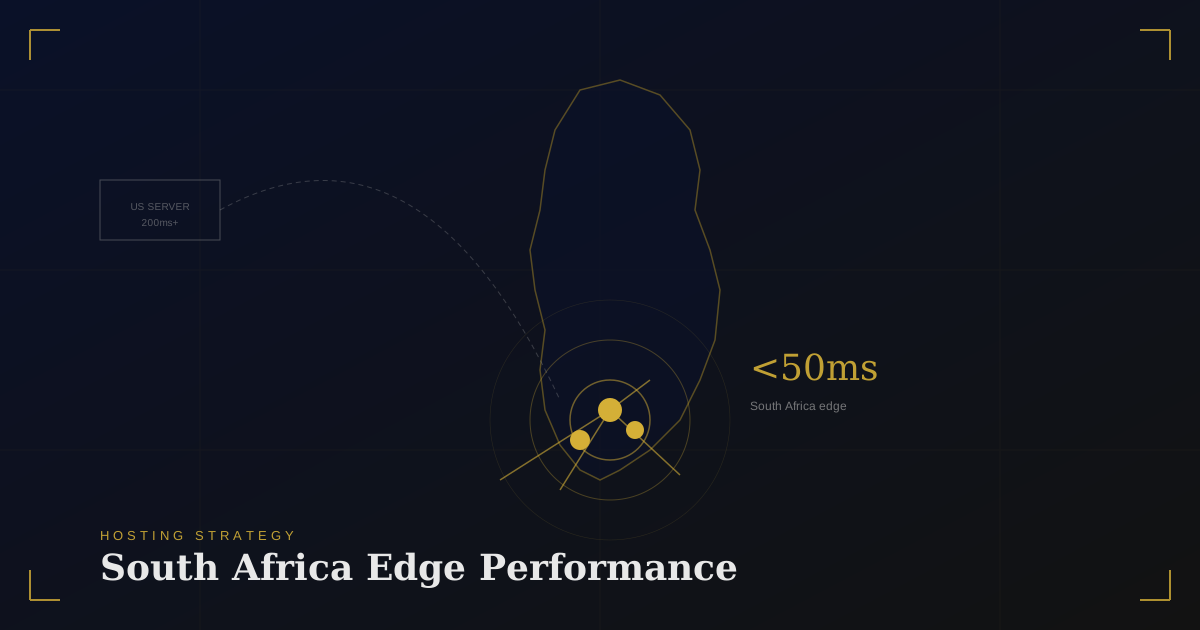
Cloudflare Pages deploys to Cloudflare's global edge network — over 300 points of presence worldwide, including locations across Africa that matter for South African businesses. Static assets are served from the nearest edge node, which means sub-50ms response times for users anywhere on the continent. The pricing model is dramatically more generous: unlimited bandwidth on the free tier, with functions billed at a fraction of Vercel's rates. For businesses with high traffic or global audiences, Cloudflare Pages often delivers both better performance and lower cost than Vercel.
The significant caveat with Cloudflare Pages is Next.js compatibility. Cloudflare runs on its own Workers runtime, not Node.js, which means some Next.js features require adaptation. Advanced server-side rendering with Node.js-specific APIs, certain middleware patterns, and some edge function behaviours differ from the standard Vercel implementation. The @cloudflare/next-on-pages adapter handles most standard cases well, but projects using cutting-edge Next.js features may encounter compatibility issues that require workarounds. For this reason, projects using experimental Next.js features should evaluate Vercel first.
For South African businesses serving primarily local audiences, Cloudflare's South African edge nodes provide a meaningful performance advantage. Cloudflare has infrastructure in Johannesburg, Cape Town, and Durban, meaning South African users receive assets from a server that may be physically closer than what US-hosted Vercel infrastructure can provide. The latency reduction for South African users is real and measurable — typically 50 to 150ms faster for initial connection times compared to North American-origin responses.
For most South African business websites: Cloudflare Pages. The performance advantages for local audiences, unlimited bandwidth pricing, and mature Next.js support through next-on-pages make it the practical choice for standard business sites. For complex Next.js applications using cutting-edge features, advanced ISR patterns, or where developer experience is the priority: Vercel. The native compatibility and exceptional DX justify the cost for the right project. This site runs on Cloudflare Pages. The performance and cost profile made it the clear choice for a content-heavy marketing site serving a primarily South African and African audience.
Independent systems architect and digital strategist. I build digital infrastructure for organisations that cannot afford to get it wrong.